The Return of the Trams — and Why Kent Should Pay Attention
Across Europe the tram has returned not as nostalgia but as infrastructure. Kent, with Canterbury's traffic and growing districts, should at least join the conversation.
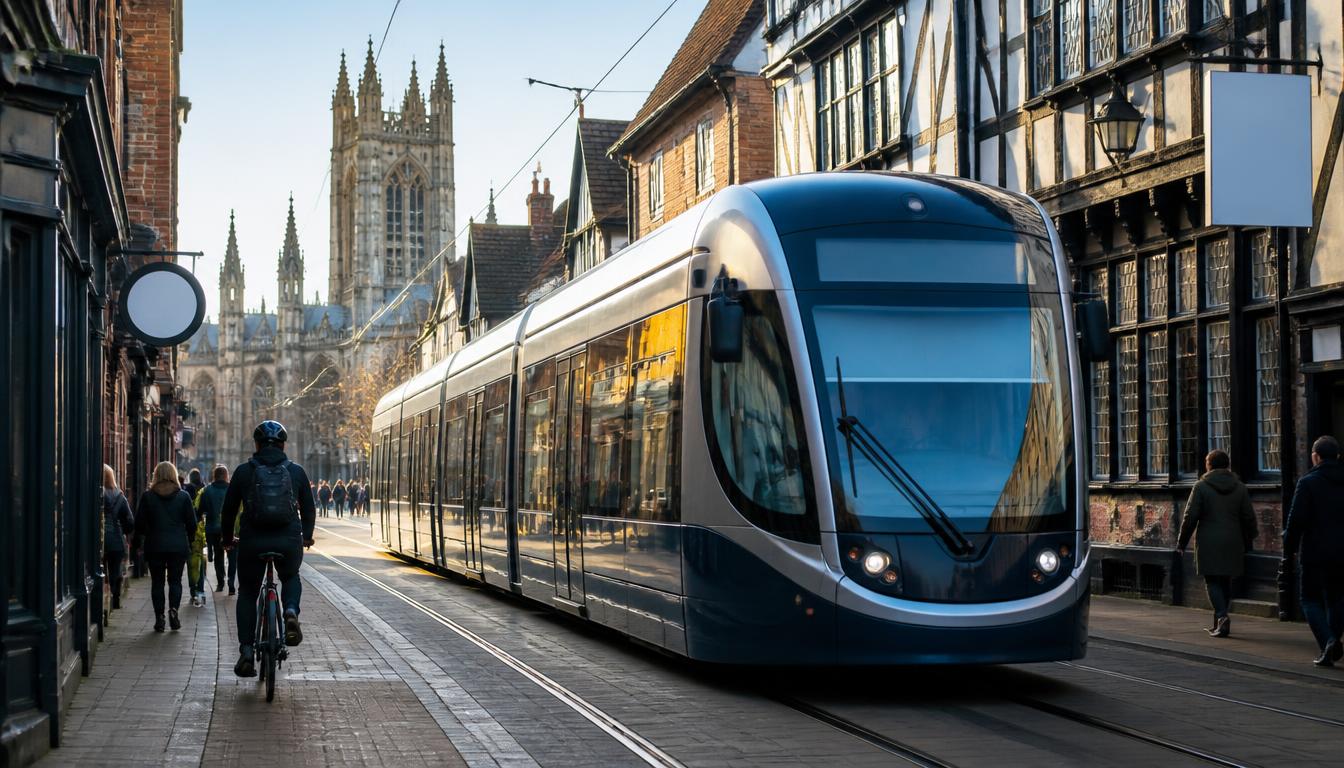
The tram was supposed to be finished. Britain tore up most of its first-generation systems in the middle of the last century, convinced that buses and cars represented progress and rails in the road belonged to the age of cloth caps. Europe made the same mistake in places, then corrected it with notable determination. The result is that while much of Britain argues about congestion, cities across the Channel have spent forty years rebuilding clean, reliable light rail networks that people actually use.
France is the clearest case. Strasbourg restored its tramway in 1994 and made it the spine of the city. Bordeaux followed, transforming its riverfront and proving that tracks could run through a historic centre without destroying its character. Montpellier, Lyon, Nice and Nantes joined in. Smaller French cities that a British planner might dismiss as too modest — Orléans, Tours, Angers, Besançon — now have systems that carry millions. The lesson is not that every town needs a tram. It is that a city which wants people out of cars must offer something visibly better.
Britain's revival has been patchier but real. Manchester's Metrolink is now the largest light rail network in the country and one of the few genuine post-war transport success stories outside London. Nottingham built a system and then extended it. Sheffield, the West Midlands and Edinburgh have networks of their own, while Blackpool never lost its line and has been vindicated by persistence. Each project had critics, cost overruns or teething problems. Each also changed how a city moves.
Kent should be watching. The county's transport problem is no longer confined to the M20 lorry queues that make the news. Canterbury's streets were not designed for modern traffic volumes, and no amount of junction adjustment can change that. The city has a compact centre, major educational institutions, a visitor economy and severe pressure on air quality. Around it, districts continue to grow. The question is not whether cars will remain necessary — they will — but whether every journey into the centre must be made in one.
A tram or modern light rail line is not a magic answer, and it should not be proposed as one. The capital cost is high, the construction disruption is real, and historic streets make engineering delicate. But buses, however improved, struggle to offer the permanence that changes behaviour. People believe in rails because rails imply commitment. Developers build near them. Passengers understand them. A visible line on the ground does what a hundred revised bus timetables rarely manage.
Technology has widened the options. Modern trams can run without overhead wires for short sections through sensitive streets, using batteries or ground-level systems where appropriate. Vehicles are quieter, lower and more accessible than anything the first tram age imagined. Hybrid light rail, using existing railway corridors where possible, may suit parts of Kent better than classic street-running. Canterbury to its park-and-ride sites, a coastal link in Thanet, or a connection between a growing town and its station all deserve proper study rather than reflex dismissal.
The objection is always cost, and it is fair as far as it goes. But congestion is not free. It is paid for in lost time, polluted air, delayed deliveries, stressed town centres and land consumed by parking. France did not rebuild tramways because they were inexpensive. It rebuilt them because the alternative was to surrender city centres to traffic and call the surrender realism.
Kent has a talent for preserving its past, sometimes to the point of embalming it. The return of the tram is a reminder that old ideas can become modern again when the problem they solved returns. Canterbury's medieval streets will never be widened. Nor should they be. What can change is how people reach them. A county proud of its history should be confident enough to learn from it.