Starting a Candle Making Business: A Genuinely Enjoyable Way to Begin
Low startup costs, fast feedback and a product people actually want. What to focus on if you want a candle business that makes money rather than a very expensive hobby.
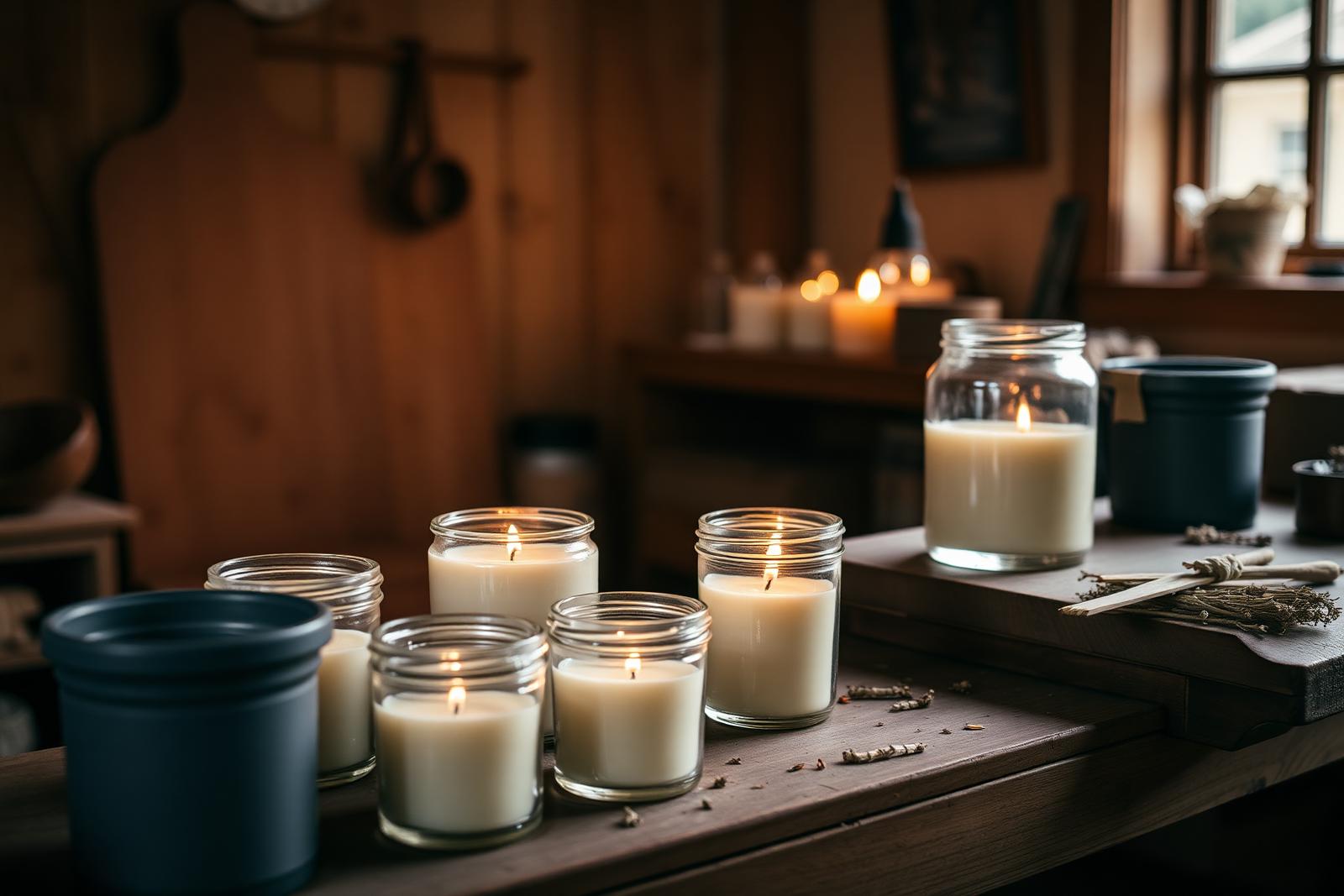
Of all the small businesses a person can start from a kitchen table, candle making may be the most quietly satisfying. I have spent years in home fragrance manufacturing, at a scale rather larger than a kitchen table, and I still think it is one of the best first businesses available to anyone who wants to make something real.
Start with why it is fun, because that matters more than people admit. You buy wax, wicks, fragrance and vessels. You melt, pour, cure and light. Within an afternoon you have a finished object in your hand. Very few businesses give you that loop so quickly. Software takes months. Services take clients. A candle takes a morning, and the feedback is immediate and sensory — it either smells right and burns clean, or it does not.
The economics are forgiving at the start. A few hundred pounds buys enough wax, wicks, jars and fragrance oil to make a hundred candles and test a range. There is no premises, no staff and no stock commitment of any consequence. You can prove or disprove the whole idea for less than the cost of a weekend away, which is a rare luxury.
Now the parts that decide whether it becomes a business.
Get the burn right before anything else. Amateur candles fail on burn, not on scent. Tunnelling, mushrooming wicks, sooting, poor scent throw — these come down to the relationship between wax type, vessel diameter, wick size and fragrance load. Test every combination properly: a full burn test, timed, in a draught-free room, logged. It is tedious. It is also the single thing separating a product from a craft-fair curiosity.
Choose your wax deliberately. Soy is popular, forgiving and markets well. Coconut blends give an excellent throw and a luxurious look but cost more. Paraffin still outperforms on scent throw and price, whatever the fashion says. Rapeseed is increasingly good and has a genuine British supply story behind it. Pick one and learn it deeply rather than dabbling across four.
Fragrance is where you compete. Anyone can buy vanilla. A range that smells like somewhere — a specific coastline, a particular season, a memory — is a range people talk about. Buy from a reputable fragrance house, use the recommended load rather than overdosing, and remember that cold throw in the jar and hot throw when lit are two different things. Test both.
Comply properly. This is not optional and it catches a lot of new makers. In the UK you need CLP labelling, a safety data sheet from your fragrance supplier, correct hazard pictograms and warnings, and appropriate testing. You will want product liability insurance. It is administrative rather than difficult, but selling without it is a poor risk for a business you hope to keep.
Price for a real margin. Add wax, wick, fragrance, vessel, lid, box, label, packaging and the postage box, then add your time honestly. Multiply the materials cost by three or four for a retail price, not by one and a half. Makers who underprice at the start find they have bought themselves a badly paid job, and raising prices later is far harder than setting them correctly now.
Decide who you are selling to early. Direct to consumer through your own site gives the best margin and the hardest customer acquisition. Markets and fairs give immediate cash and priceless face-to-face feedback on scent. Wholesale to independent shops gives volume at roughly half the retail price, so your costings must survive that. Private label for hotels, spas and other brands is the least glamorous route and often the most profitable.
Photograph it properly. Candles sell on atmosphere. A good photograph of a lit candle in real light will outperform any description you write. This is the cheapest leverage available to you.
The trap to avoid is the one every maker falls into: making forty scents because making them is enjoyable. A tight range of six that you know burn perfectly will outsell a sprawling collection every time, and it will make your stock, your labels and your production sane.
Begin small, test relentlessly, price honestly and pick a point of view on fragrance. Then keep going for two years. That is the whole recipe, and the fact that it smells wonderful while you do it is a genuine advantage over most ways of making a living.