How to Start a Home Soap-Making Business
Low start-up costs, real margins and a product people buy again and again. But soap is a regulated cosmetic, and that is where most beginners trip up.
Of all the kitchen-table businesses I have seen people start, soap making has one of the best profiles: modest equipment, ingredients you can buy by the kilo, a product with genuine repeat purchase, and customers who actively want the handmade version. It also has a trapdoor under it that catches almost every beginner, which is that soap sold to the public in the United Kingdom is a cosmetic product, and cosmetics are regulated. Get that part right and this is a lovely business. Skip it and you are trading illegally from your first market stall.
Let me deal with the regulation first, because everything else is straightforward by comparison. Under the UK cosmetics regulations, every soap you sell must have a cosmetic product safety report prepared by a qualified assessor, and your products must be registered on the government's Submit Cosmetic Product Notification portal before sale. A safety assessment for a small range typically costs a few hundred pounds per recipe — less per variant if you are sensible and build a range on one or two base formulas. You also need proper labelling: ingredients in the correct INCI format, your address, batch codes, weight. None of this is optional, and trading standards do check craft fairs.
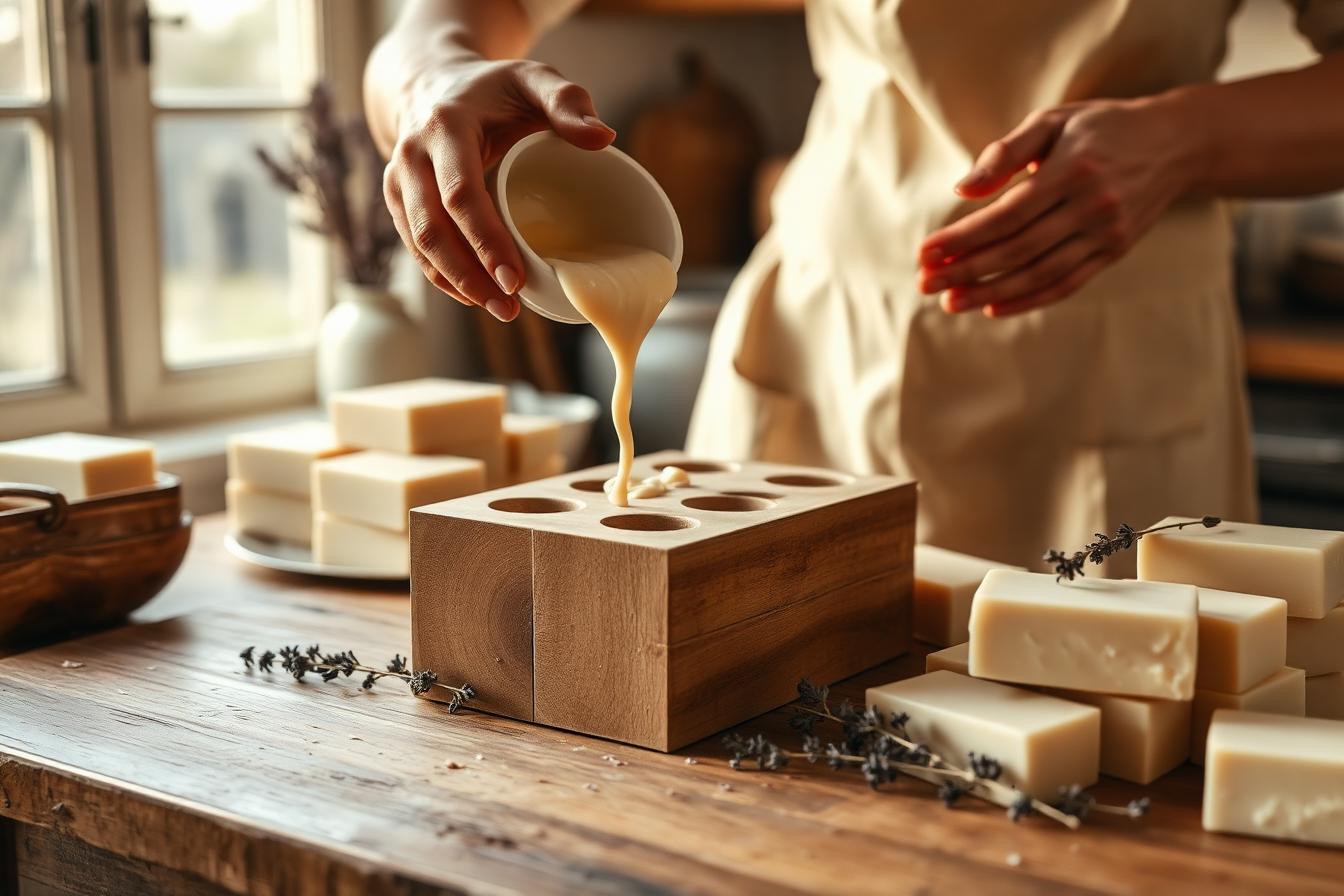
Now the craft itself. Cold process soap — oils mixed with a carefully calculated lye solution, poured into moulds and cured for four to six weeks — is where the quality and the margins live. Melt-and-pour bases are easier and need no lye handling, but the product is less distinctive and the margins thinner. Either way, buy a decent digital scale accurate to a gram, because soap is chemistry and chemistry does not forgive guesswork. Your early batches should be small, logged meticulously, and given away to friends who will tell you the truth.
The economics are genuinely attractive. A bar of handmade soap costs roughly eighty pence to a pound-fifty to make, depending on your oils and fragrance, and sells at a market or online for four to seven pounds. Specialist bars — goat's milk, honey and oat, sea salt, shampoo bars — go higher. Very few home businesses offer a gross margin like that on a product the customer uses up and comes back for. Soap is the opposite of the one-sale problem.
Where beginners waste money is variety. They launch with twenty scents because variety feels like abundance. It is actually dead stock. Start with four bars done superbly — one gentle unscented, one lavender or similar classic, one citrus, one speciality — and let customers vote with their money before you expand. Packaging matters more than you think: a simple kraft wrap, a clean label and consistent photography will outsell a fussy ribbon every time, because soap is bought as a gift as often as for the bathroom.
Sales channels, in order of how I would approach them. Local markets and craft fairs first, because the feedback is instant, the cash is immediate, and you will learn more about pricing in one Saturday than in six months online. Then your own simple website for repeat orders — your market customers will ask for it. Then the online marketplaces, accepting their fees as the cost of traffic. Wholesale to local shops, hotels and guest houses can come later and is excellent volume, but only once your production is reliable; a shop that sells out and cannot get restocked does not reorder.
A few hard-won practicalities. Cure time means your cash is tied up in stock for six weeks, so plan production backwards from your sales calendar — Christmas stock is made in October. Keep your making area, recipes and batch records obsessive, because the day you have a customer query about a reaction is the day your records become your business's best friend. Insure yourself properly with product liability cover; it is cheap and essential. And watch your fragrance and essential oil usage rates against the safety assessment, never your nose.
The people who succeed at this treat it as manufacturing, not as a hobby with a till. Same quality, every batch, every time, with the paperwork to prove it. Do that, and a spare room, a good nose and a market stall can quietly become a real income — the kind that smells, rather pleasingly, of lavender.