Is Beekeeping a Profitable Home Business?
Honey sells for a premium and the bees do the work. But between the romance and the revenue sit varroa mites, winter losses and some honest arithmetic.
Every spring, a new wave of people falls for the same appealing idea: a few hives at the bottom of the garden, jars of golden honey with a handsome label, and a business that essentially runs on sunshine and flowers. I understand the attraction entirely — I have stood at an open hive on a warm June afternoon and thought there could be no more pleasant way to earn a pound. But beekeeping as a business is a specific thing with specific numbers, and it rewards exactly the people who do those numbers before they buy the beesuit.
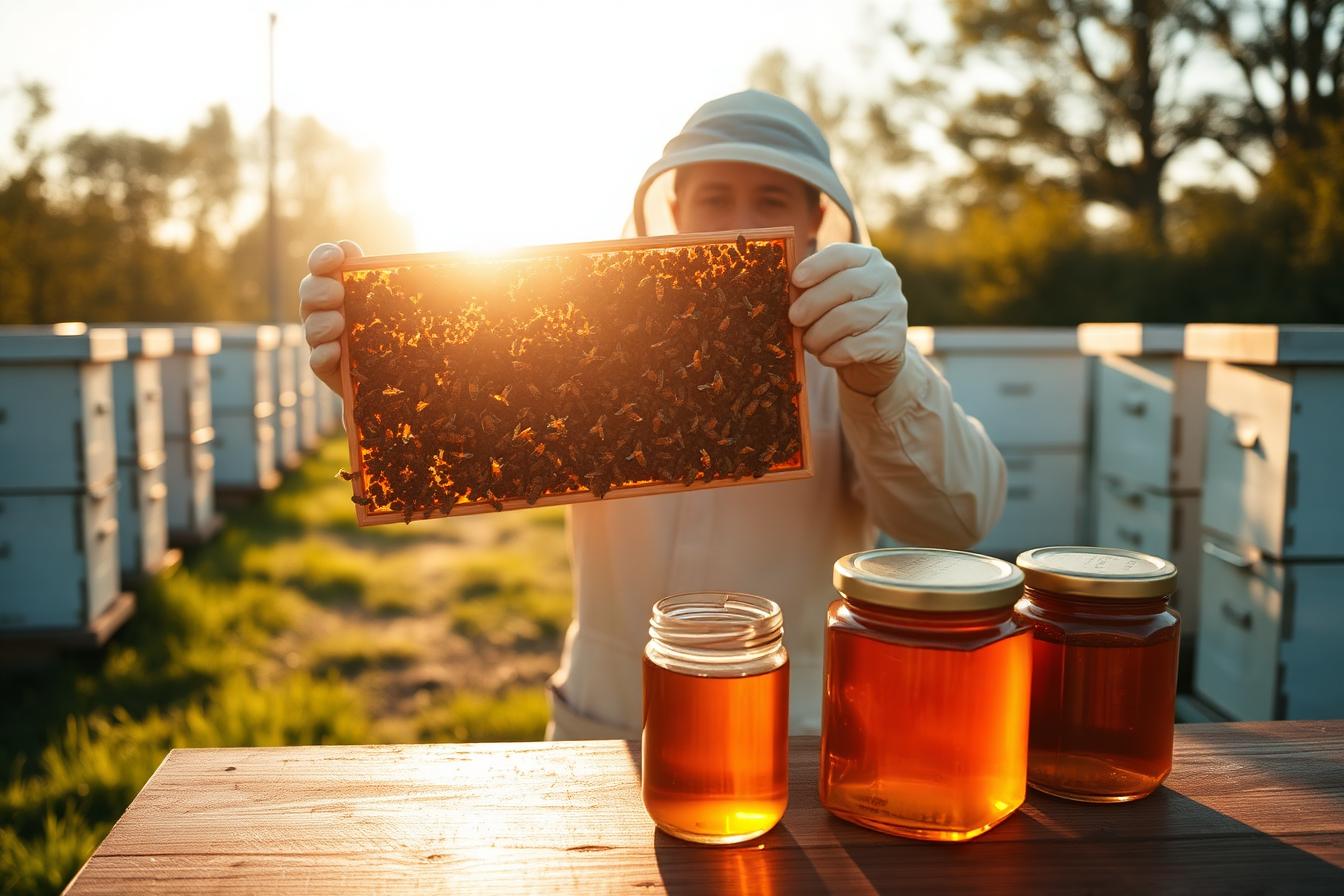
Start with the revenue, because it is genuinely good. British honey is in chronic undersupply — we import the overwhelming majority of what we eat — and local honey commands a real premium. Depending on your area and your label, a 340g jar of genuinely local honey retails anywhere from seven to twelve pounds, and sells steadily at farm gates, markets, village shops and to a loyal list of regulars. A well-sited, well-managed hive in a decent year might produce thirty to fifty pounds of surplus honey. Run the figure and a single good hive could gross you five hundred pounds or more at retail.
Now the costs, which the springtime dreamers tend to skip. A hive with frames, a nucleus colony, a suit, smoker, extractor and jars will set you back somewhere between five hundred and a thousand pounds per colony to start properly. Honey is seasonal, so your income arrives in a late-summer lump while costs arrive all year. And then there is the central biological fact of modern beekeeping: varroa. The varroa mite and the viruses it carries mean colonies die. Winter losses for British beekeepers routinely run at ten to twenty per cent and spike higher in bad years. A business plan that assumes every colony survives every winter is a fairy tale, not a plan.
This is why the profitable beekeepers I have observed all diversify, and it is the most important lesson in the trade. Honey alone is a hobby that pays for itself. A business layers other income on top of the same hives: nucs — small starter colonies — sold to other beekeepers in spring at well over a hundred pounds each; beeswax candles and polish; cut comb and chunk honey at a premium; pollination arrangements with local fruit growers; hive-hosting schemes where businesses pay you to keep branded hives on their land; and, for the confident, beginners' courses and honey-tasting experiences. Each stream is modest. Stacked together on thirty hives, they become an income.
Scale matters in a particular way here. Two hives is a delightful hobby. Somewhere around twenty to forty hives, run efficiently, is where the arithmetic starts to look like a serious side business — but that is also the point where beekeeping stops being an hour on a Sunday and becomes inspections, swarm control, disease vigilance, extraction weekends and record-keeping across multiple apiary sites. Be honest with yourself about which of those two lives you actually want, because the middle ground is where people burn money and enthusiasm at the same time.
The practical foundations are unglamorous and non-negotiable. Join your local beekeeping association and take the beginners' course before you spend a pound on equipment; you will learn more in one season beside an experienced beekeeper than from any book. Register with the National Bee Unit's BeeBase, because disease notification and inspection exist to protect everyone, and the inspectors are genuinely helpful. Learn to spot the notifiable diseases — foulbrood above all — and treat varroa on evidence, not on vibes. Keep records per hive as if you were farming, because you are.
So, is it profitable? Yes — as a diversified micro-business run by someone who has served their apprenticeship with the bees, respects the losses, and builds revenue from wax, nucs, pollination and teaching as well as jars. No — as a passive income fantasy of watching bees from a deckchair while the money pours in. The bees work hard. The profitable beekeeper works harder. But for the right person, in the right place, with thirty hives and a good label, it is one of the more honest and satisfying ways to earn a living from a small patch of the English countryside.