Why I Write Looking Out to Sea
My desk faces the Thames Estuary, and I would not have it any other way. On the ever-changing canvas outside my window, the walks through town, and the cast of characters a whole life provides.
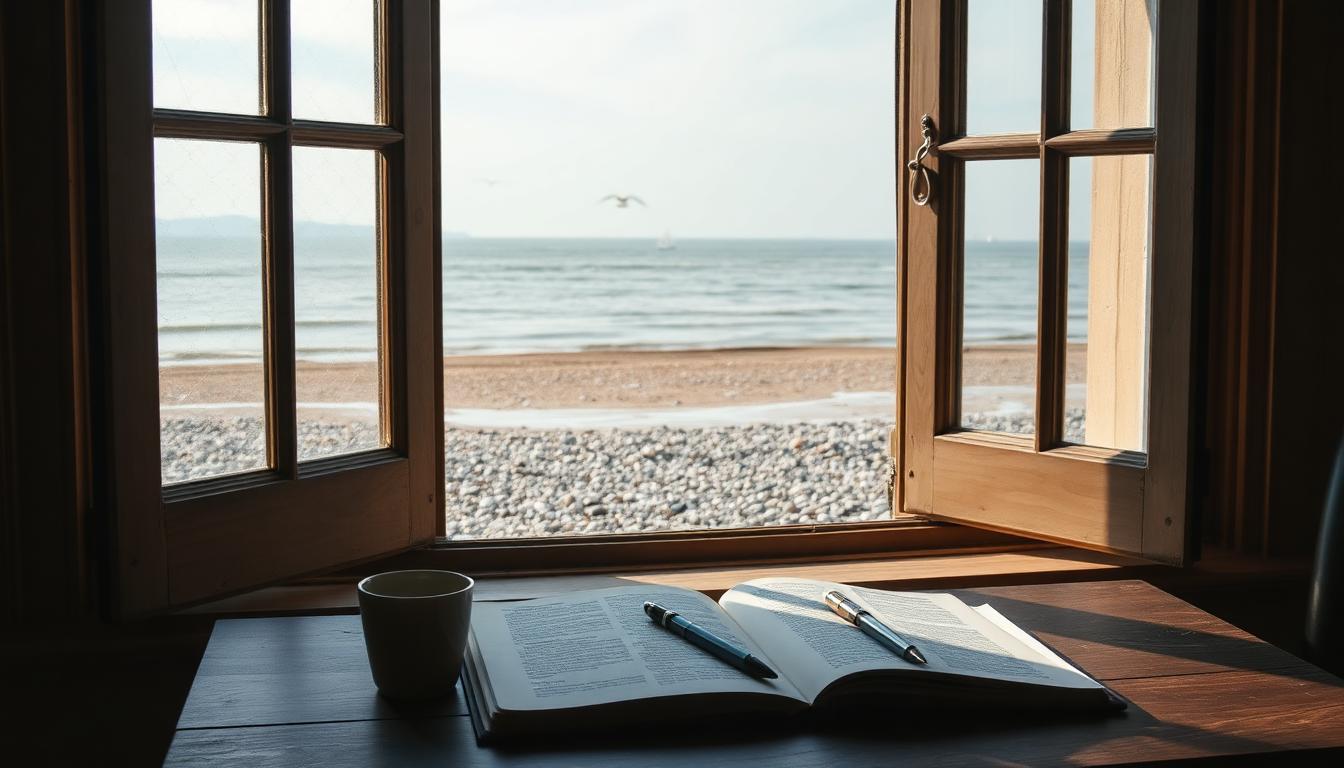
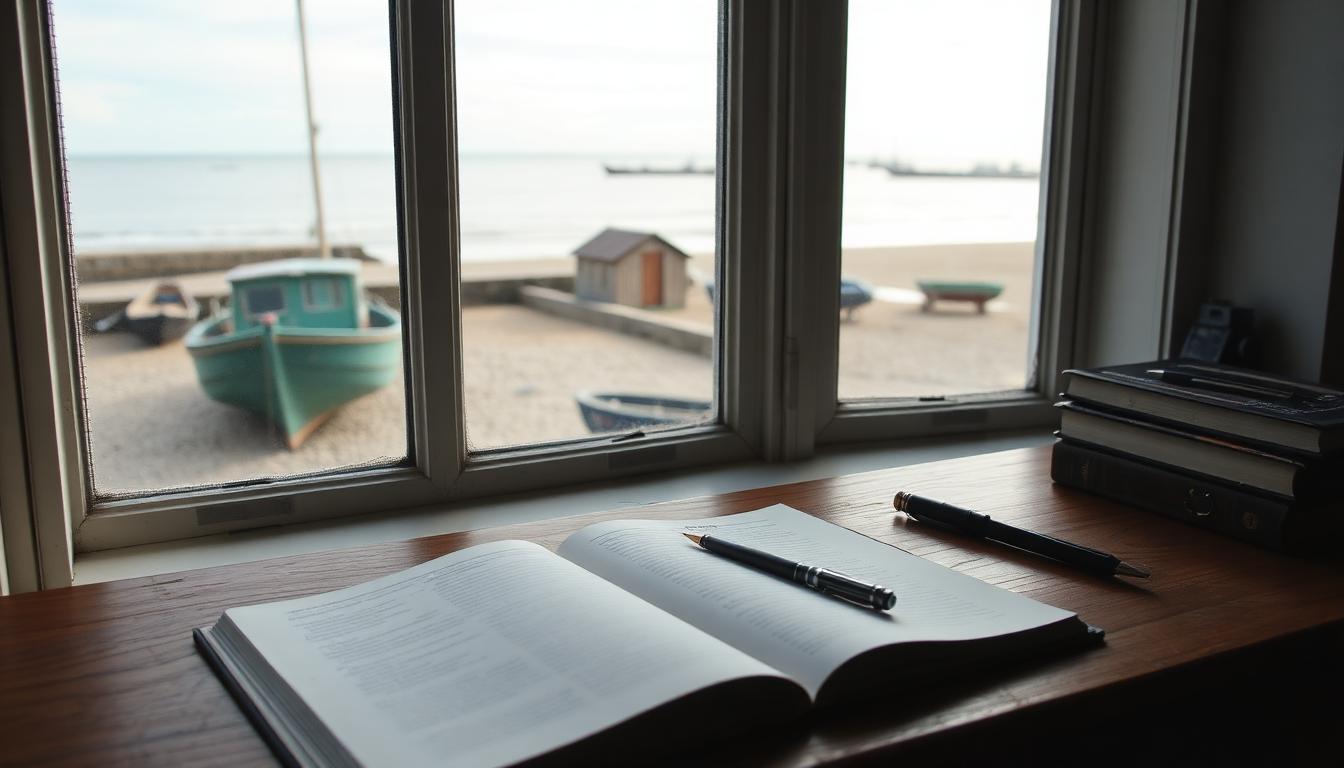
Every writer has a view, even if it is only a brick wall. Mine is the sea. My desk sits in front of a window in Whitstable that looks straight out across the shingle to the Thames Estuary, and I would not swap it for any study in the world. Some people would call it a distraction, and I understand the charge, because there are mornings when I appear to do little more than watch the water. But I have come to think of the view as the second member of staff — the one that never speaks, never tires, and quietly does half the work.
What delights me, after all these years, is that it never repeats itself. The estuary is an ever-changing canvas. At dawn it can be grey steel, flat and serious; by lunch it has turned to green glass with the tide running; and on a good evening the whole thing is gilded, and the sailing barges and the gulls move across it like brushstrokes. Weather here is not a report on the radio but a spectacle: you can watch a squall walk across the water towards you, rearranging the light as it comes, long before it reaches the window. A writer needs two things above all — something to say and the patience to say it well — and the sea supplies the patience in industrial quantities.
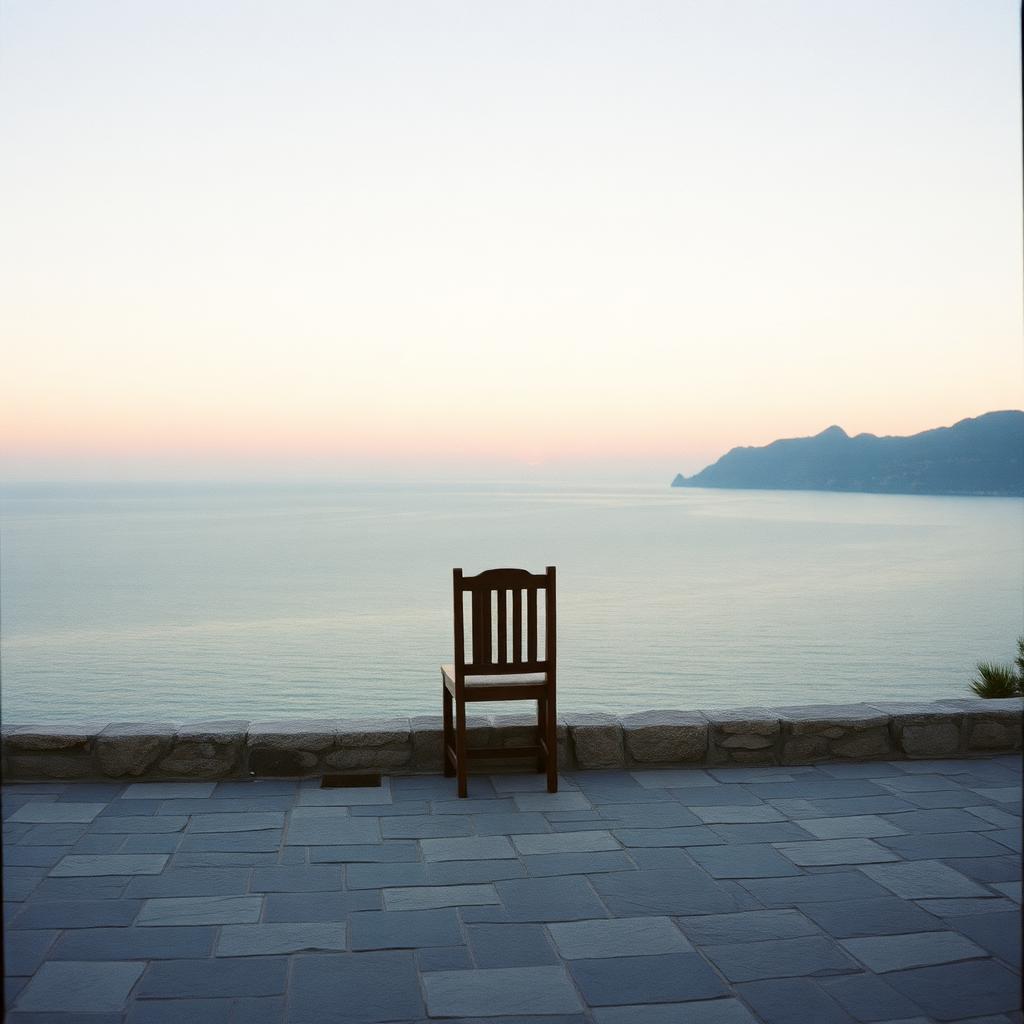
Memoir, I have found, is an act of looking back, and looking back is easier when the eye has somewhere far to rest. The horizon is the only straight line in this house, and yet it is never quite the same twice. When I am deep in a chapter about a summer in Andalusia or a winter in Mallorca, I can lift my head from the page and let the distance do its work. Memory needs room to breathe, and thirty miles of water provides it. The heat and the smell of those places come back to me more honestly here, with the gulls arguing outside, than they ever did in a closed room.
When a sentence refuses to settle, I walk. Whitstable is a town made for the stalled writer. Ten minutes among the working boats in the harbour, or along the shingle towards the Old Neptune, or up Harbour Street past the little independents, sorts more plot problems than an hour of frowning at the screen. The town moves at the pace of the tide rather than the pace of the clock, and there is always something to notice — a conversation outside a shop, a fisherman mending something that did not need mending, the particular grey of the water before rain. Detail is the currency of writing, and this place pays out constantly.
Then there are the characters. A long life furnishes you with a cast no novelist could invent from scratch. Mine includes fishermen and publicans, holiday reps and tour operators from the travel years, entrepreneurs I built businesses alongside, and people met once at a conference or a café on the other side of Europe who somehow never left me. They turn up in my books wearing false names and different hats, but their voices are real, because I listened. If the memoirs and the novels have any depth at all, it is because they are populated by people I actually knew, in places I actually stood.
There is a responsibility in that, and I take it seriously. When you write about real people, even disguised, you owe them honesty and kindness in roughly equal measure. The interesting people in a life are rarely the easy ones, and the complicated memories are usually the valuable ones. Writing them is, in the end, an act of gratitude — a way of saying that an afternoon decades ago mattered, that a chance meeting bent the course of things, that none of it was wasted.
The sea does different work depending on the book. For the memoirs it is a doorway to the past. For the novels it is a masterclass in atmosphere. Espionage, like the weather here, is mostly tension and light — long calm stretches with something moving underneath, then a sudden change of pressure. Watching a storm build over the estuary teaches you more about pacing a thriller than any manual. And for the Mediterranean stories, the light on the Kent water at certain hours is close enough to the light on the other sea that the two coasts begin to converse.
People sometimes ask why the writing has gone deeper as the years have gone on, and the honest answer is that I stopped rushing. The tide keeps its own timetable and pays no attention to yours, and a lifetime's characters do not give up their meaning quickly either. You have to sit with them. A room with a sea view makes the sitting a pleasure rather than a discipline, and that, I suspect, is the whole secret.
Writers are forever told to find a room of their own. I would amend the advice: find a window of your own. It does not have to be the sea. But it should be something that changes — something alive, with its own moods, that will still be interesting on the ten-thousandth morning. The blank wall makes you work; the living view makes you want to.
So that is why I write looking out to sea. I supply the words, but the estuary sets the pace, the town provides the cast, and the window reminds me every day that the world is larger and stranger and more generous than anything I will ever fit on a page — which is precisely why the page is worth filling.