AI in Pharmacology: What It Is Actually Changing
Beyond the headlines about machines discovering drugs, artificial intelligence is reshaping pharmacology in ways that are less cinematic and rather more important.
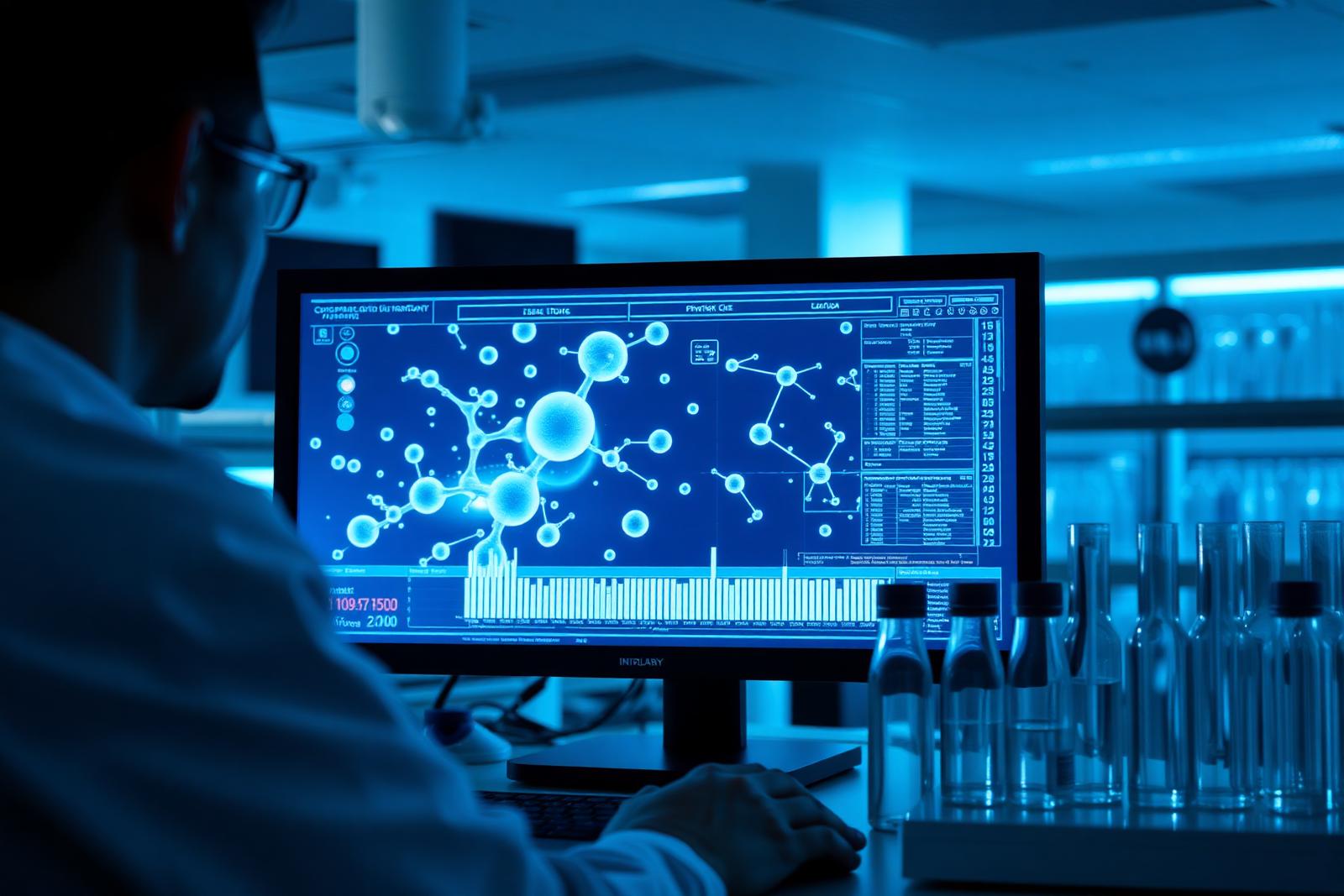
Drug development is one of the most punishing endeavours in commercial science. Roughly nine in ten candidates entering clinical trials fail. The cost of bringing a single approved medicine to market, once the failures are accounted for, runs well over a billion pounds, and the process routinely takes a decade or more. Any technology that improves those odds even modestly is worth serious attention.
Artificial intelligence is doing exactly that, though not quite in the way the headlines suggest. The machine is not inventing medicines. It is compressing the parts of pharmacology that consist of searching enormous spaces for patterns — and pharmacology, it turns out, is largely that.
Target identification comes first. Before you design a drug you must decide which biological mechanism to interfere with, and getting that wrong is the single largest cause of late-stage failure. Machine learning applied to genomic, proteomic and clinical datasets can surface associations between a protein and a disease that no individual researcher would find by reading. It does not prove causation. It produces a better-ordered queue of hypotheses for people to test.
Structural prediction changed the field genuinely. DeepMind's AlphaFold solved, to a useful approximation, the problem of predicting a protein's three-dimensional shape from its amino acid sequence — work that previously required months of crystallography per structure. Predicted structures for essentially every known protein are now freely available. If you want to design a molecule that fits a binding site, knowing the shape of the site is not a detail; it is the whole task.
Molecule generation is where the speed shows. The space of chemically plausible small molecules is estimated at around ten to the sixtieth. No screening programme will ever traverse it. Generative models can propose novel structures optimised simultaneously for binding affinity, solubility, metabolic stability and synthetic accessibility, and virtual screening can filter billions of compounds computationally before anything is made in glass. Programmes that once took four or five years to reach a clinical candidate have been brought to under eighteen months.
Toxicity prediction may matter most of all. A great many failures come not from a drug that does not work but from one that harms — hepatotoxicity, cardiac effects on the hERG channel, unexpected off-target binding. Models trained on historical compound data increasingly flag these liabilities early, when the response is to redesign the molecule rather than to stop a trial. Killing a bad candidate cheaply is, financially, almost as valuable as finding a good one.
Clinical trials are being reshaped quietly. AI is used to identify eligible patients from electronic health records, to select trial sites likely to actually recruit, to predict dropout, and to stratify participants by likely response so that a real effect in a subgroup is not buried in an average. Poor recruitment is one of the most expensive problems in the industry and one of the least discussed.
And then there is repurposing. Existing approved drugs come with decades of safety data. Models that map drug-target-disease relationships across the published literature and trial databases can propose that an established compound might work somewhere entirely different. Because the safety profile is known, such candidates can move to efficacy testing far more quickly than anything new.
The honest limitations deserve equal billing. These models are only as good as their training data, and pharmacological data is riddled with publication bias, unreported negative results and unreproducible findings. Biology is not chemistry; a molecule that binds beautifully in silico may do nothing in a living system with compensatory pathways, immune responses and metabolism. Regulators reasonably require explainability, and the more capable a model is, the harder that tends to be. Very few AI-originated drugs have yet completed the full journey to approval, which is the only result that finally counts.
There is also a structural concern worth naming. Models tend to explore near what they already know. The risk is an industry that becomes extremely efficient at producing variations on established chemistry while genuinely novel mechanisms — which usually emerge from unexpected observations rather than optimisation — receive less attention.
My own view, having spent years in medical device and detection technology where similar promises were made, is that the realistic gain is compression rather than transformation. Ten years becomes six or seven. Nine failures in ten becomes seven or eight. That sounds modest until you translate it into medicines reaching patients years earlier, and into treatments for rare diseases becoming economically viable when they previously were not.
It is not a machine inventing a cure. It is a machine removing several years of expensive searching so that the scientists can spend their time on the part that still requires judgement. In pharmacology, that is worth a very great deal.