The Growth of Home Beekeeping: Something Truly Special Is Happening in Our Gardens
Something rather wonderful is happening in gardens, allotments and small plots across Britain. Home beekeeping is booming — and its greatest reward has very little to do with honey.
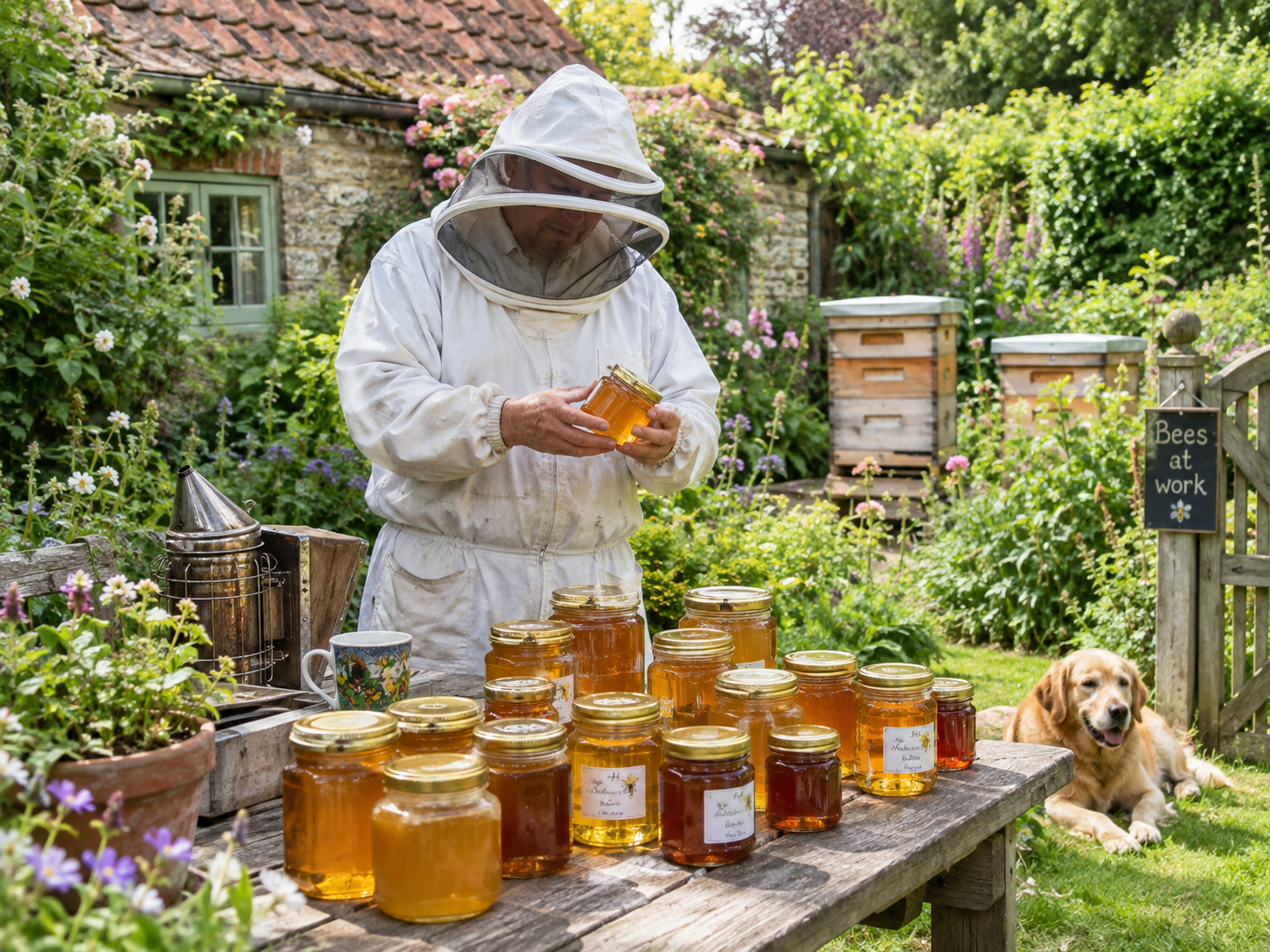
There is something rather wonderful happening in gardens, allotments and small plots of land across Britain. More people are discovering beekeeping, not simply as a way of producing their own honey, but as a way of reconnecting with nature and understanding the extraordinary ecosystem that exists quite literally outside our back doors.
Beekeeping was once regarded as a predominantly rural pursuit, often passed between generations. Today, hives can be found in suburban gardens, community spaces and even on city rooftops. The British Beekeepers' Association now supports around 30,000 beekeepers through its network of 73 associations, while more than 52,700 beekeepers across England, Wales and Scotland are registered with the National Bee Unit's BeeBase system.
For me, the attraction of home beekeeping goes much deeper than honey.
A Different Connection With Nature
Open a beehive and you are looking into one of nature's most remarkable societies.
A healthy colony can contain tens of thousands of bees, each performing a role within an extraordinarily organised community. Worker bees forage, nurse young bees, defend the colony, clean the hive and regulate its temperature. At the centre is the queen, responsible for producing the next generation.
Once you begin keeping bees, you inevitably start observing the world differently. You notice when blossom appears. You become interested in which plants are flowering in April rather than June. You watch the weather more carefully. Suddenly lavender, apple blossom, ivy, clover and dandelions have another meaning.
Beekeeping creates an almost seasonal rhythm to life that many of us have lost.
The Importance of Pollination
Bees are enormously important pollinators. As they travel between flowers collecting nectar and pollen, they transfer pollen between plants, helping them reproduce.
The Royal Horticultural Society's guidance on bees and pollinators explains that insect pollination is essential for most fruits and many vegetables to crop successfully.
A beekeeper therefore quickly discovers that keeping bees and gardening become closely connected. You start thinking about planting for longer flowering seasons, providing water and reducing unnecessary pesticide use.
The RHS also maintains its excellent Plants for Pollinators resources, showing how even relatively small gardens, patios and containers can provide valuable food sources for pollinating insects.
Then, Of Course, There Is The Honey
There is something incredibly satisfying about taking a jar of honey from your own hive.
Local honey reflects the landscape around the colony. Bees may have visited hundreds of thousands of flowers within the surrounding area, meaning every harvest represents a particular place and a particular season.
But honey should really be considered a wonderful by-product of responsible beekeeping rather than its sole purpose.
The colony comes first.
A responsible beekeeper leaves enough stores for the bees themselves and understands that some years will produce considerably more honey than others.
Good For The Mind As Well As The Garden
There is another benefit that is harder to measure.
Standing beside a hive requires concentration and calmness. Bees demand your attention. You cannot spend twenty minutes inspecting a colony while simultaneously checking emails, answering messages and worrying about tomorrow's diary.
You are simply there.
In an increasingly connected world, there is something incredibly refreshing about an activity that requires patience, observation and respect for another living species.
It is perhaps one reason why beekeeping seems so special. It slows life down.
Beekeeping Comes With Responsibility
Keeping honeybees should never be undertaken without preparation. They are living creatures and require regular inspection, disease management and responsible husbandry.
The British Beekeepers' Association's guide to getting started recommends contacting a local association, attending a taster day or beginners' course and gaining practical experience before buying bees.
I think that is excellent advice.
New beekeepers should also consider registering with BeeBase through the National Bee Unit. Registration helps authorities monitor bee health, pests and disease outbreaks.
The government guidance on protecting honey bees from pests and diseases sets out practical steps for spotting problems early, managing varroa mites and keeping colonies healthy through the seasons.
It is also important to remember that honeybees are only one part of the picture. Britain has more than 270 species of bee, including bumblebees and numerous solitary bees. Simply adding more honeybee colonies is not automatically conservation. Creating plentiful forage and habitat for all pollinating insects is equally important.
Something Worth Rediscovering
Perhaps the growth of home beekeeping says something about our changing relationship with the world around us.
We spend more of our lives surrounded by screens, technology and constant information. Yet somewhere at the bottom of a garden, a colony of bees continues a way of life that has existed for millions of years.
Keeping bees gives us an opportunity to enter that world.
You may get some wonderful honey from it. Your garden may become more productive. You will almost certainly learn a great deal about flowers, weather, seasons and wildlife.
But perhaps the greatest benefit is simpler.
For a few moments, you stop.
You listen to the gentle hum of thousands of bees going about their lives and realise just how extraordinary the natural world really is.
Further reading
If the idea has taken hold, these are the four sources I would read, in this order, before buying a single frame of bees.
- 1.BBKA: Becoming a beekeeper
Start here. It sets out the commitment, the equipment and the local associations that will teach you far more quickly than any book.
- 2.RHS: Plants for Pollinators
Read next, while you plan. Good forage across a long season matters more than the hive itself, even in a small garden or on a patio.
- 3.RHS: Garden bees and pollinators
Then widen the view. It explains how honeybees sit alongside bumblebees and solitary bees, and why biodiversity is the real measure of success.
- 4.GOV.UK: Protecting honey bees from pests and diseases
Keep this one to hand once you have bees. Registration, varroa management and early warning signs are the duties that come with the hobby.