The History of a Shutter: A Small Object, A Long Story
How a simple piece of painted wood carries centuries of climate, craft and Mediterranean daily life.
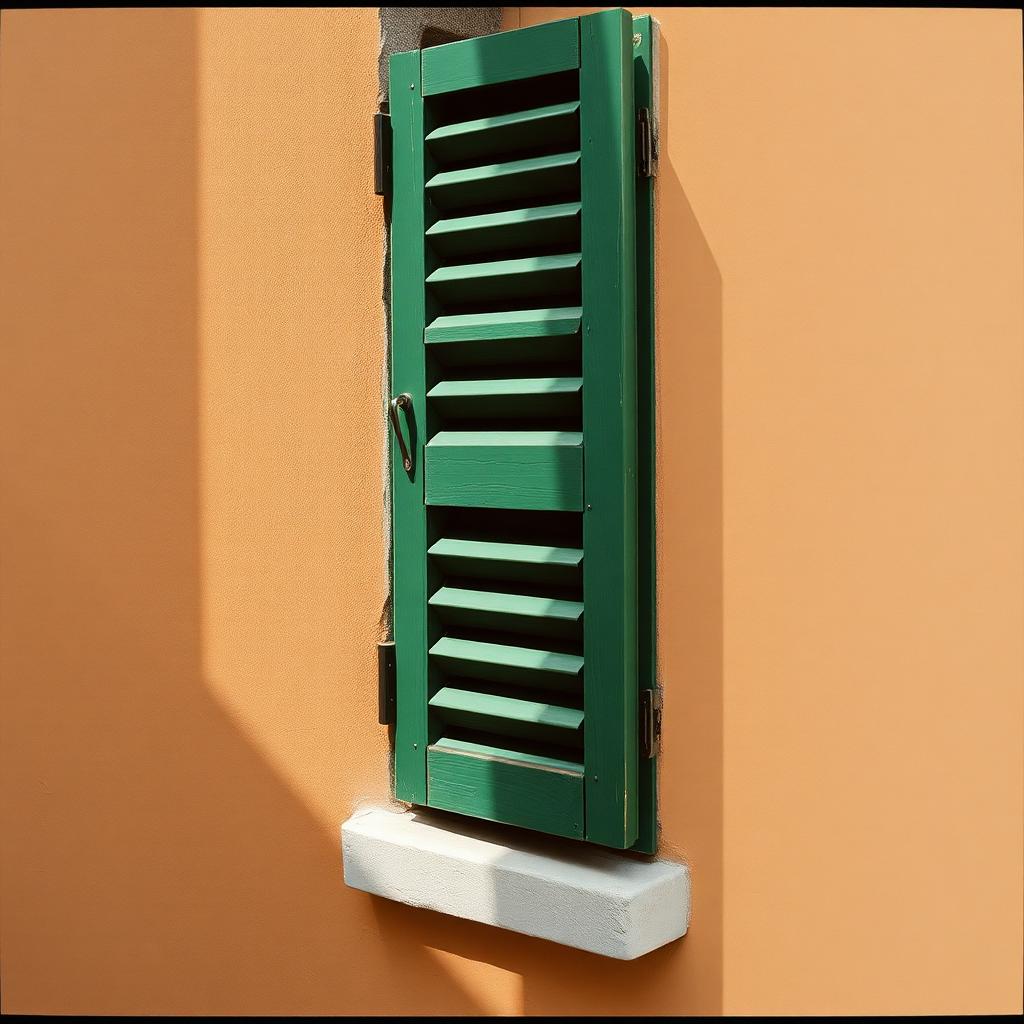
The shutter is one of those objects the modern world tends to overlook, and yet it may be the most quietly historical thing on a Mediterranean street.
It was, first of all, a piece of climate engineering. Long before air conditioning, before mechanical ventilation, the shutter was how a house in Andalusia or the Balearics survived August. Closed by mid-morning. Opened at dusk. The interior of the house lived at a different temperature to the street outside, and that was the shutter's doing.
It was also a piece of social architecture. A shuttered window is a private one. A half-open one is a conversation. A shutter thrown wide at midday is a household announcing something — an arrival, a celebration, a return.
The colours are not decorative accidents. The green shutters of Catalonia, the blue of the Cyclades, the deep navy of Mallorca — each is a regional signature, shaped by the pigments once locally available and the traditions that grew up around them.
When I put a shutter on the cover of a book, I am not putting a picture there. I am putting several centuries there. The reader does not need to know this. The shutter does the work anyway.