Why Entrepreneurs Are Switching to Small Business Retreats
The best strategic thinking rarely happens between meetings. Founders are increasingly stepping away — briefly, deliberately — to think clearly, challenge assumptions and return with a plan.
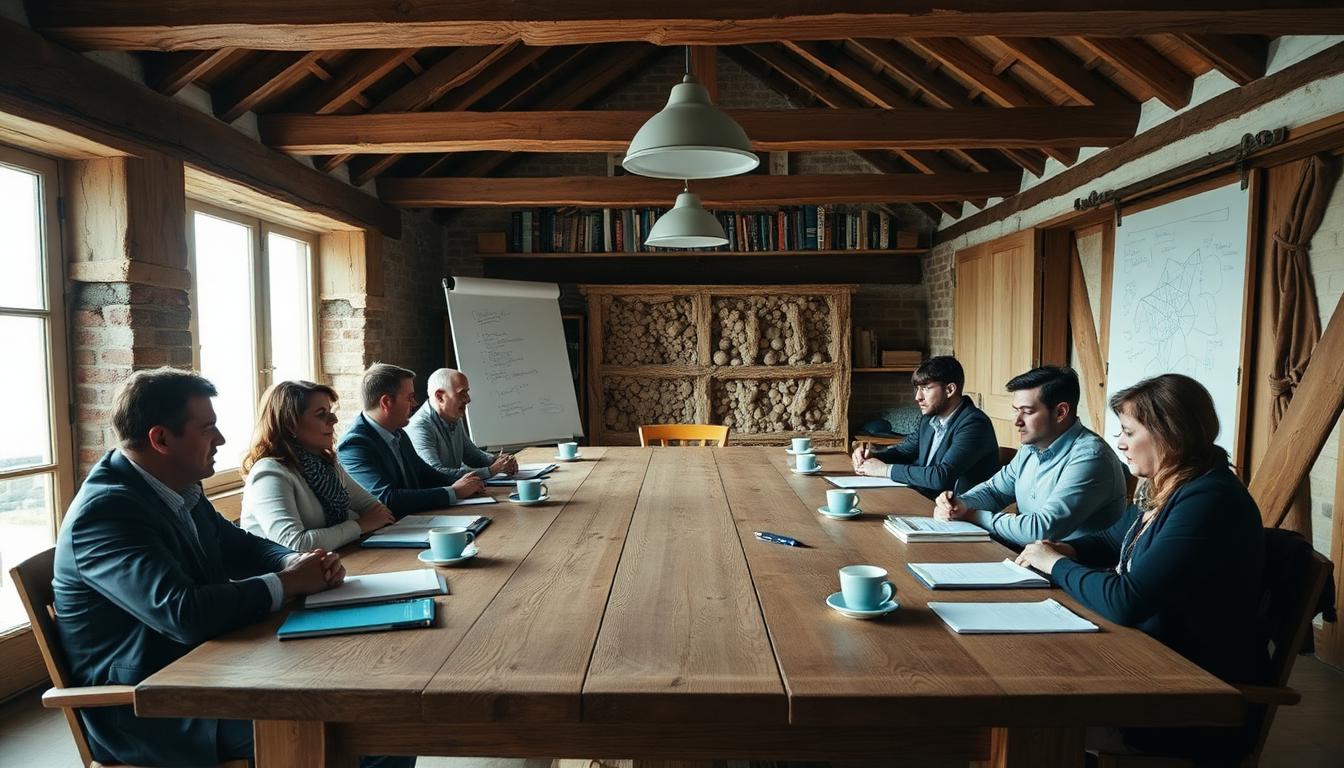
Most businesses do not suffer from a shortage of activity. They suffer from a shortage of altitude. The diary fills, the inbox multiplies, the team needs answers, and the important questions — where are we going, what are we not doing, what would make this company meaningfully better — are pushed into the evenings when everyone is too tired to answer them properly. That is why a growing number of founders and leadership teams are turning to small business retreats and executive retreats. They are buying back the conditions in which serious thought is possible.
A retreat is not a holiday with a flipchart. Done badly, it is precisely that, and the market has plenty of expensive versions. Done well, it is a structured interruption. You take the decision-makers out of the building, away from the operational noise, and give them the time and framework to look at the business as it actually is rather than as the weekly report describes it. The change of setting matters because behaviour changes with setting. People interrupt less. They listen longer. They say the thing they have been circling for months.
The benefits are practical. Strategy becomes specific instead of aspirational. Succession, pricing, hiring, culture and risk can be discussed as connected issues rather than isolated emergencies. Difficult conversations happen more easily outside the building where roles and habits are fixed. A founder can test an idea against experienced peers rather than against the silence of their own concern. A leadership team can leave with three decisions and a timetable instead of forty notes and a sense of virtue.
The rise of companies such as PURE ONE Business reflects that demand. Its approach is built around the fact that entrepreneurs do not need another generic conference. They need a smaller room, credible facilitation and an environment that encourages candour. The value is not luxury for its own sake. It is the removal of friction: the right people, the right agenda, enough privacy to be honest, and enough discipline to turn honesty into action. Details are at PURE ONE Business.
There is also a peer effect that is hard to reproduce elsewhere. Business can be lonely at the top, particularly in a small company where the founder cannot always share doubts with employees or family. A retreat places those doubts among people who understand them. Someone else has missed the payroll forecast, hired too fast, kept a poor client too long or lost sight of why they started. The exchange of that experience, properly hosted, is worth more than another folder of templates.
The setting is not incidental. Coastal air, countryside, good food and unhurried time are not indulgences bolted onto the work. They are part of how the work improves. Minds behave differently when the body is not trapped under fluorescent light. A walk between sessions can resolve more than a third hour around a table. The best retreats understand that restoration and rigour are partners, not rivals.
Scepticism is healthy. If a retreat produces only inspiration, it has failed. The test is what happens on the Monday after. Are the decisions written down? Is ownership clear? Have one or two things been stopped rather than ten more started? Has anyone agreed to have the awkward conversation that was postponed all year? A good retreat creates momentum because it creates clarity.
Entrepreneurs are switching because the alternative is increasingly expensive: strategy made in fragments, culture by default, and founders carrying questions alone that should be examined in good company. A business does not need to be large to benefit. It needs to be honest enough to pause.
The working world is very good at motion and much less good at reflection. A small retreat, properly run, restores the balance. It gives a business the rarest thing in modern life: time to think on purpose.