Salt, Seasalter and the Industry Britain Quietly Lost
The north Kent coast once produced sea salt at scale. Today a village called Seasalter is almost all that remains of it — a name outliving the trade that gave it one.
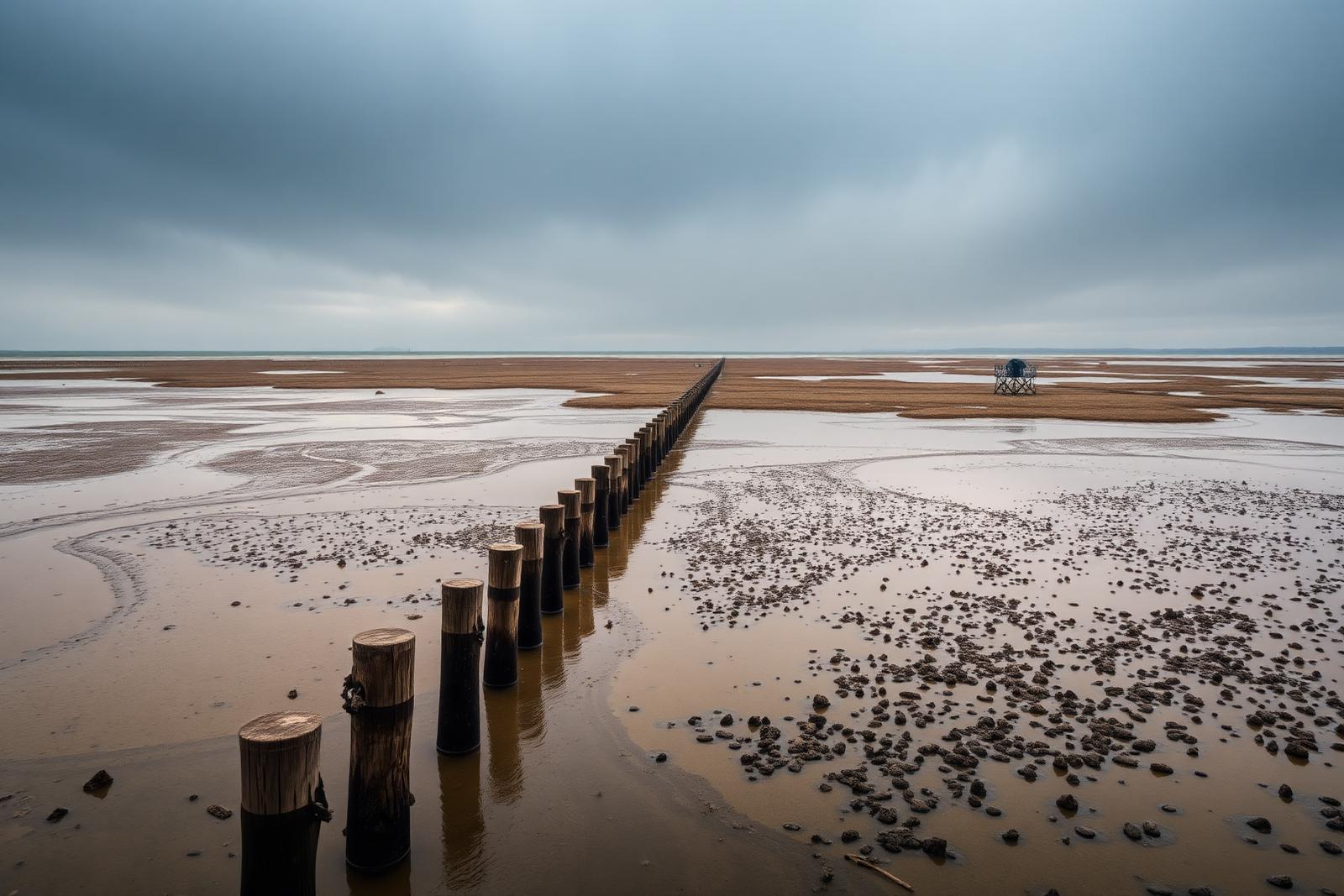
Just west of Whitstable, along a low stretch of the north Kent shoreline, there is a village called Seasalter. It is a quiet place of shingle, sea wall, marsh birds and low houses facing the Swale. The name is not decorative. It is a job description, and it is roughly eleven hundred years old.
Seasalter appears in the Domesday Book as a salt works belonging to the monks of Christ Church, Canterbury. The Old English is plain enough — the salter by the sea. The archbishop's kitchens needed salt, and this shallow, muddy, tidal coast was ideal for making it. There is no salt production there now. Not a pan, not a works, not a single commercial producer. The name has outlived the industry by several centuries, which is a strange kind of monument.
Britain's relationship with salt runs deeper than most people realise. Before refrigeration, salt was not a seasoning, it was infrastructure. It preserved fish, bacon, butter and hides. It made winter survivable. A community without access to salt was a community that could not store food, and the wealth of whole regions rested on who controlled it. The suffix *wich* in Nantwich, Northwich, Middlewich and Droitwich marks the inland brine towns, where salt was drawn from underground deposits laid down in the Triassic. Cheshire in particular sat on an ocean's worth of it.
The coastal trade worked differently. Sea salt production on the Kent and Essex shores relied on the sun, the wind and enormous patience. Seawater was let into shallow ponds on the saltings, allowed to concentrate through evaporation, then boiled in lead or iron pans over fires until crystals formed. In a good dry summer the sun did much of the work. In a wet one it did almost none, and the fuel bill devoured the profit.
That was the first vulnerability: the British climate is a poor partner for solar evaporation. The Mediterranean producers of France, Spain and Portugal could rely on months of dry heat and made salt far more cheaply. Every wet English August was a bad year for a coastal salter.
The second was fuel. Boiling brine consumes a staggering amount of wood and later coal. As Kentish woodland was consumed by shipbuilding and iron working, fuel prices climbed, and a coastal works far from the coalfields was squeezed from both ends.
The third, and decisive, factor was Cheshire. Rock salt was discovered near Northwich in 1670, and inland brine pumping scaled into something coastal evaporation could never match. A concentrated brine drawn straight from the ground, boiled beside a canal that carried cheap coal in and finished salt out, produced a purer product at a fraction of the cost. Once the canals and then the railways connected Cheshire to every market in the country, the small coastal works had no argument left.
Taxation finished the job. The salt duty, levied heavily from the seventeenth century until its repeal in 1825, was collected in a way that suited large registered producers and crushed small ones. Compliance costs alone were enough to close marginal works. By the time the duty was lifted, the coastal industry it had strangled no longer existed to be revived.
So Seasalter became something else — oyster grounds, marshland, later a caravan site and a stretch of coast known to birdwatchers and to anyone who has walked the sea wall in winter. Whitstable turned decisively to oysters, and made its modern reputation on them instead. The salt simply went, leaving a name behind on the map.
There is a coda worth noting. British sea salt has come back, though on entirely different terms. Maldon in Essex, on the same kind of estuarine coast, built an international premium brand out of pyramid crystals sold in small boxes at a price per kilogram that a medieval salter would find incomprehensible. Cornwall, Anglesey and the Isle of Wight have followed. The industry that died competing on cost survives, quietly, competing on quality.
That is the pattern, and it is not confined to salt. When a commodity trade collapses under cheaper production elsewhere, what comes back is never the commodity. It is the story, the provenance and the craft. Seasalter kept the name. Maldon took the market. Both, in their way, are the same industry.