America's Most Progressive Cities for Start-Ups
The action is no longer only in the Bay Area. From Austin to Raleigh, a new map of American enterprise is being drawn — and the lessons travel well.
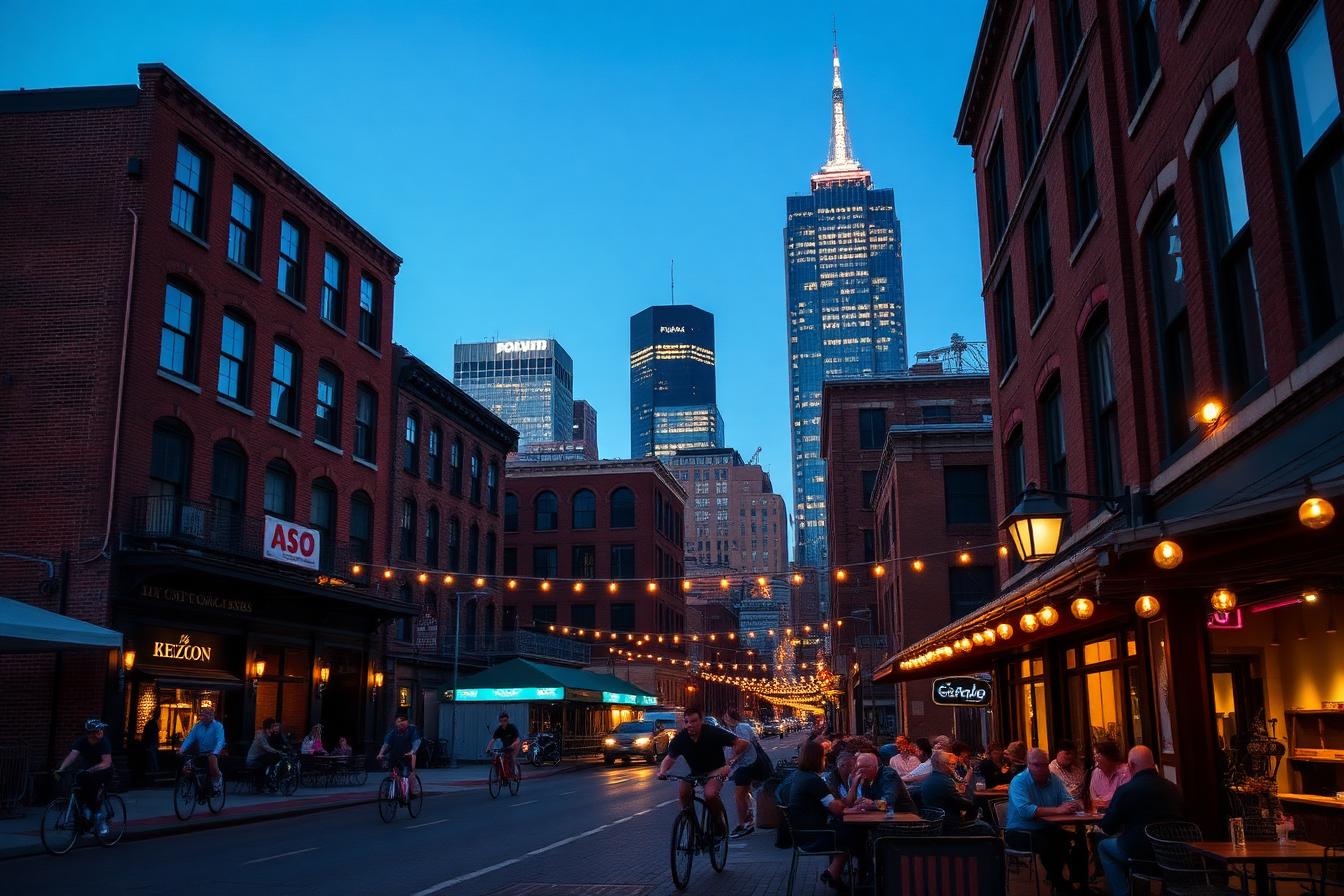
For thirty years the geography of American start-ups had a single centre of gravity, and every ambitious founder made the same pilgrimage to a fifty-mile strip of northern California. That era is over. The combination of impossible housing costs, remote working and deliberate policy in rival states has scattered American enterprise across a dozen cities, each with a distinct character and a distinct pitch to founders. Having watched this redistribution with interest, a few places stand out — not for their hype, but for the substance underneath it.
Austin remains the headline act, and unlike most headline acts it has earned it. The formula was visible early: a serious research university, no state income tax, a cost of living that used to be a fraction of the coasts, and a civic culture that actively liked new things. The big technology firms arrived and seeded it with talent, but the more interesting story is the density of genuine early-stage companies and a venture community that grew locally rather than being flown in. Austin's challenge now is its own success — housing and congestion are eroding the very advantages that built it, which is the eternal test of a boomtown.
Miami made the loudest pitch of the decade, and beneath the noise something real happened. A mayor who answered founders' questions on social media at midnight turned out to be an effective recruitment strategy, and the city pulled in a striking concentration of venture capital, financial technology and Latin American-facing business. Miami's actual advantage is structural: it is the commercial capital of the Americas, bilingual, and positioned between time zones and markets. Its weakness is the flip side of its glamour — costs have run ahead of infrastructure, and it has yet to prove it can grow companies as well as attract them.
The one I find most instructive is Raleigh-Durham, which almost nobody outside America talks about and everybody inside American venture respects. The Research Triangle was doing university-led innovation — three major research institutions feeding one economy — decades before it was fashionable. The result is a city that produces deep technical companies in life sciences and software with unusual consistency, at costs that still allow a start-up to breathe. It is the anti-hype city: patient, well-educated, quietly compounding. If you want to understand where durable American enterprise actually lives, look there.
Denver and Boulder have built something distinctive around quality of life as a deliberate economic strategy — the mountains are not decoration, they are recruitment policy — and it works, drawing founders and engineers who could work anywhere. Nashville has turned its healthcare industry cluster into a genuine health-technology start-up scene, which is what a city should do: build new industries on the deep expertise it already has. Salt Lake City's 'Silicon Slopes' has produced a remarkable run of software companies from a small population, powered by tight networks and a strikingly young workforce.
And the old giants should not be written off. New York has become the clear second centre of American venture capital and leads in financial technology and applied AI, with an advantage no one can replicate: every industry in the world has an office there. Boston remains supreme in life sciences and robotics, fed by an unmatched concentration of research universities. What changed is not that these cities declined — it is that founders now have real alternatives, and the giants must compete for the talent they once took for granted.
What do the winners share? The pattern is consistent enough to be a checklist. A serious university wired into the local economy rather than sealed off from it. Housing a young company and its young staff can actually afford. Capital that is local enough to take a coffee meeting. A civic government that answers the telephone. And a culture — the hardest thing to manufacture — where failure is treated as experience rather than disgrace.
The lesson for Britain is uncomfortable but useful. America is building enterprise ecosystems in a dozen places at once, while we continue to pile our ambitions into one overheated city. The American cities winning this race are not the ones with the biggest reputations. They are the ones that made themselves easy to build in. That is a choice, and it is available to anyone willing to make it.